

How to Choose the Right PIM for Your Business: 10 Things to Consider Before Buying
Choosing a Product Information Management (PIM) system is not simply a matter of comparing software features.
For growing e-commerce and enterprise businesses, a PIM becomes an important part of the digital commerce architecture.
The right PIM can help your organization centralize product information, improve data quality, support multiple markets, accelerate product launches, and distribute consistent product content across websites, marketplaces, mobile applications, and other channels.
The wrong PIM, however, can create additional complexity, expensive customization, difficult migrations, and poor user adoption.
That is why choosing a PIM should begin with your business requirements and product data strategy, not with a software demo.
In this guide, we'll cover the 10 most important things to consider before selecting a PIM system.
What Is a PIM System?
A PIM, or Product Information Management system, is designed to centralize, manage, enrich, govern, and distribute product information.
Depending on the business, product information may include:
- Product names
- Descriptions
- Attributes
- Technical specifications
- Categories
- Product relationships
- Images
- Videos
- Documents
- Marketing content
- SEO content
- Translations
- Localized content
- Marketplace information
- Channel-specific content
A PIM can become the central product information layer connecting systems such as ERP, DAM, MDM, e-commerce platforms, marketplaces, and other digital channels.
But not every PIM is suitable for every organization.
Why Choosing the Right PIM Matters
A PIM implementation can become a long-term investment.
Once implemented, the system may become responsible for thousands or millions of product records and serve multiple teams and digital channels.
Your PIM may need to support:
- Product managers
- Marketing teams
- E-commerce teams
- Merchandising teams
- Data teams
- Sales teams
- Regional teams
- Suppliers
- Developers
- External partners
It may also need to integrate with your existing technology ecosystem.
Changing a PIM later can be expensive and disruptive.
Therefore, the goal should not be:
"Which PIM has the most features?"
The better question is:
"Which PIM best fits our business, data, users, architecture, and future growth?"
1. Start With Your Business Requirements
Before looking at PIM vendors, define what you actually need the system to accomplish.
Ask:
- Why are we implementing PIM?
- What problems are we trying to solve?
- How many products do we manage?
- How many product categories do we have?
- How many users will work with the system?
- How many markets do we serve?
- How many languages do we support?
- How many digital channels do we have?
- Which systems need to integrate with PIM?
- What are our product data quality problems?
For example, one company may primarily need PIM for product enrichment.
Another may need:
- Complex product modeling
- Supplier data onboarding
- Marketplace syndication
- Global localization
- Advanced workflows
- Multi-brand management
These businesses should not necessarily choose the same PIM.
Your requirements should drive your PIM selection.
2. Understand Your Product Data Model
One of the most important considerations is the complexity of your product data.
A simple product might have:
- Name
- SKU
- Price
- Description
- Image
But enterprise products can have hundreds of attributes.
For example, an industrial equipment company may need:
- Technical specifications
- Materials
- Dimensions
- Certifications
- Compliance information
- Safety information
- Compatibility
- Product variants
- Accessories
- Replacement parts
- Documentation
Your PIM must be able to represent this complexity without making everyday product management unnecessarily difficult.
Before selecting a PIM, document:
- Product types
- Attributes
- Attribute groups
- Categories
- Variants
- Product relationships
- Units of measurement
- Localized fields
- Channel-specific fields
A strong product data model is the foundation of a successful PIM implementation.
3. Evaluate Product Taxonomy and Classification
Product taxonomy defines how products are organized.
For example, an electronics company might have:
Electronics → Computers → Laptops → Gaming Laptops
Another company may require a much more complex classification structure.
Your PIM should support the taxonomy structure your business needs.
Consider whether the platform supports:
- Multiple categories
- Hierarchical categories
- Multiple classifications
- Product-to-category relationships
- Category-specific attributes
- Different taxonomies for different markets
- Channel-specific classifications
- Marketplace-specific categories
This becomes particularly important when selling through multiple marketplaces.
Different marketplaces may have completely different category structures and attribute requirements.
4. Check Data Quality and Validation Capabilities
A PIM should not simply store product data.
It should help improve product data quality.
Look for capabilities such as:
- Required fields
- Validation rules
- Data completeness scoring
- Attribute validation
- Duplicate detection
- Business rules
- Approval workflows
- Data quality dashboards
- Automated validation
For example, before a product is published to a marketplace, you may want the PIM to verify that:
- Product name exists
- Product description exists
- Required attributes are complete
- Product image is available
- Category is assigned
- Technical specifications are complete
This helps prevent incomplete product information from reaching customers.
5. Consider Workflow and Approval Requirements
Product information is often managed by multiple teams.
For example:
Product Manager → Content Team → Marketing → Legal → Regional Team → E-commerce
Without proper workflow management, teams may depend on email, spreadsheets, and manual approvals.
A PIM should ideally support workflows appropriate to your organization.
Consider whether you need:
- Draft status
- Review status
- Approval status
- Publishing status
- Role-based permissions
- Regional approvals
- Brand approvals
- Automated workflows
- Notifications
- Audit trails
A good workflow can reduce bottlenecks and make ownership clearer.
6. Evaluate Integration Capabilities
Your PIM will rarely operate as an isolated system.
It may need to integrate with:
- ERP
- DAM
- MDM
- CRM
- PLM
- E-commerce platforms
- Marketplaces
- Search platforms
- CMS
- Data warehouses
- Supplier systems
- Mobile applications
This makes integration capabilities extremely important.
Before selecting a PIM, understand:
Which systems will send data to PIM?
Which systems will receive data from PIM?
Which system owns each data field?
For example, your ERP may own SKU and inventory-related information, while PIM owns product descriptions and attributes.
Clear data ownership can prevent synchronization problems later.
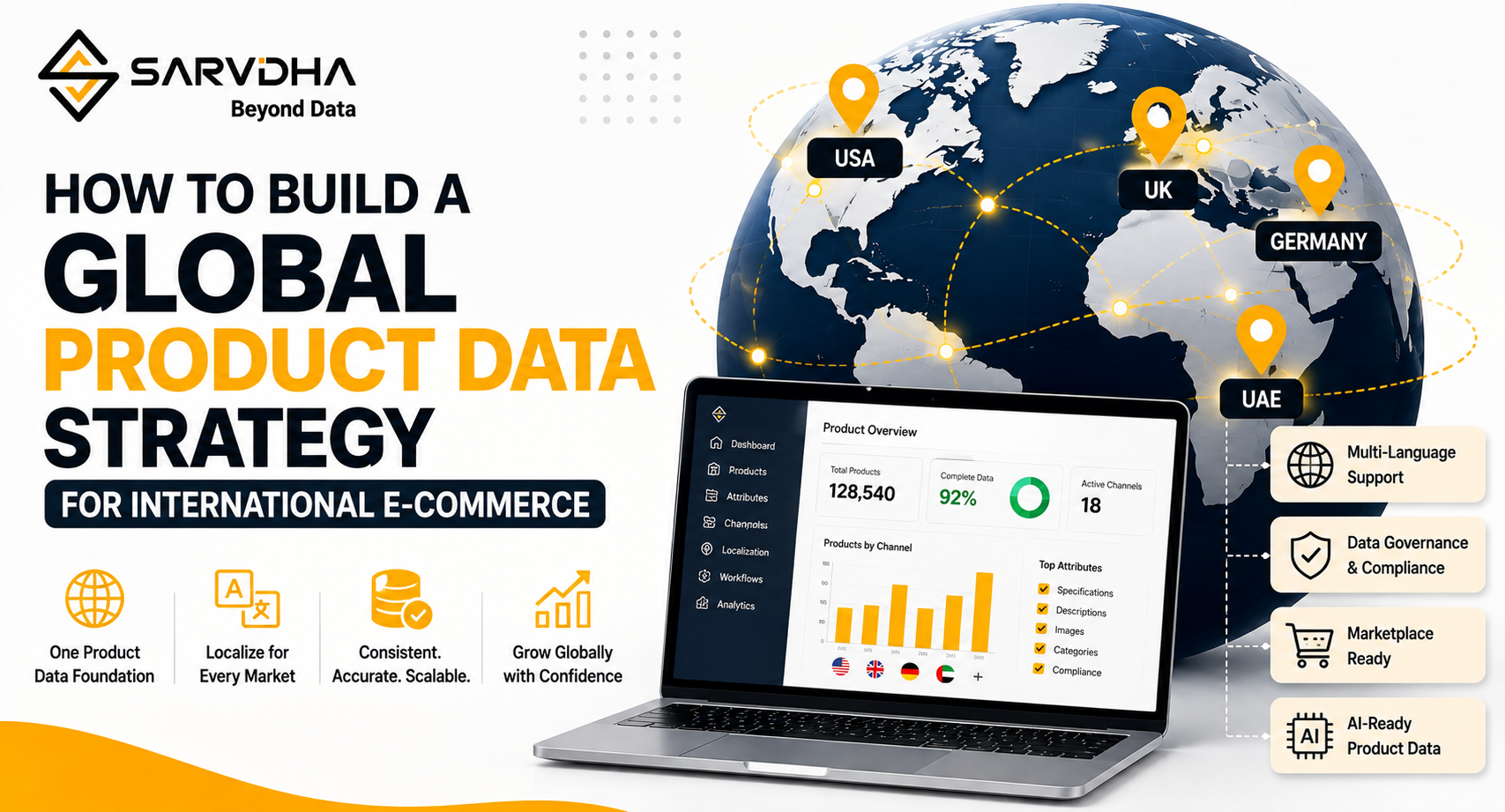
7. Think About Global and Multilingual Commerce
If your business operates internationally, localization should be considered from the beginning.
A product may need different content for:
- United States
- United Kingdom
- Germany
- France
- UAE
- Other European markets
You may need to manage:
- Multiple languages
- Regional descriptions
- Local product names
- Regional attributes
- Market-specific content
- Different measurement units
- Local regulations
- Country-specific categories
- Channel-specific content
For international businesses, multilingual and multi-market capabilities can be a critical PIM requirement.
Do not assume that a PIM designed for a single-market business will automatically work well for global commerce.
8. Consider Your Sales Channels
Where will your product information be published?
Your answer may include:
- E-commerce website
- Mobile application
- Amazon
- eBay
- Regional marketplaces
- Distributor portals
- Retail partners
- Social commerce
- B2B portals
Each channel may have different requirements.
For example, a marketplace may require specific attributes that your website does not.
A PIM should help your business transform centralized product information into the appropriate format for different channels.
This is particularly valuable when the number of channels continues to grow.
9. Evaluate Scalability and Performance
Your PIM may work perfectly with 10,000 products today.
But what happens when you have:
100,000 products?
Or:
1 million products?
And what happens when you add:
- More users
- More markets
- More languages
- More channels
- More integrations
- More product attributes
- More suppliers
Scalability should therefore be evaluated before implementation.
Consider:
- Product volume
- Attribute volume
- User volume
- API performance
- Import performance
- Export performance
- Search performance
- Integration scalability
- Cloud architecture
- Deployment options
Your PIM should support your expected growth rather than only your current requirements.
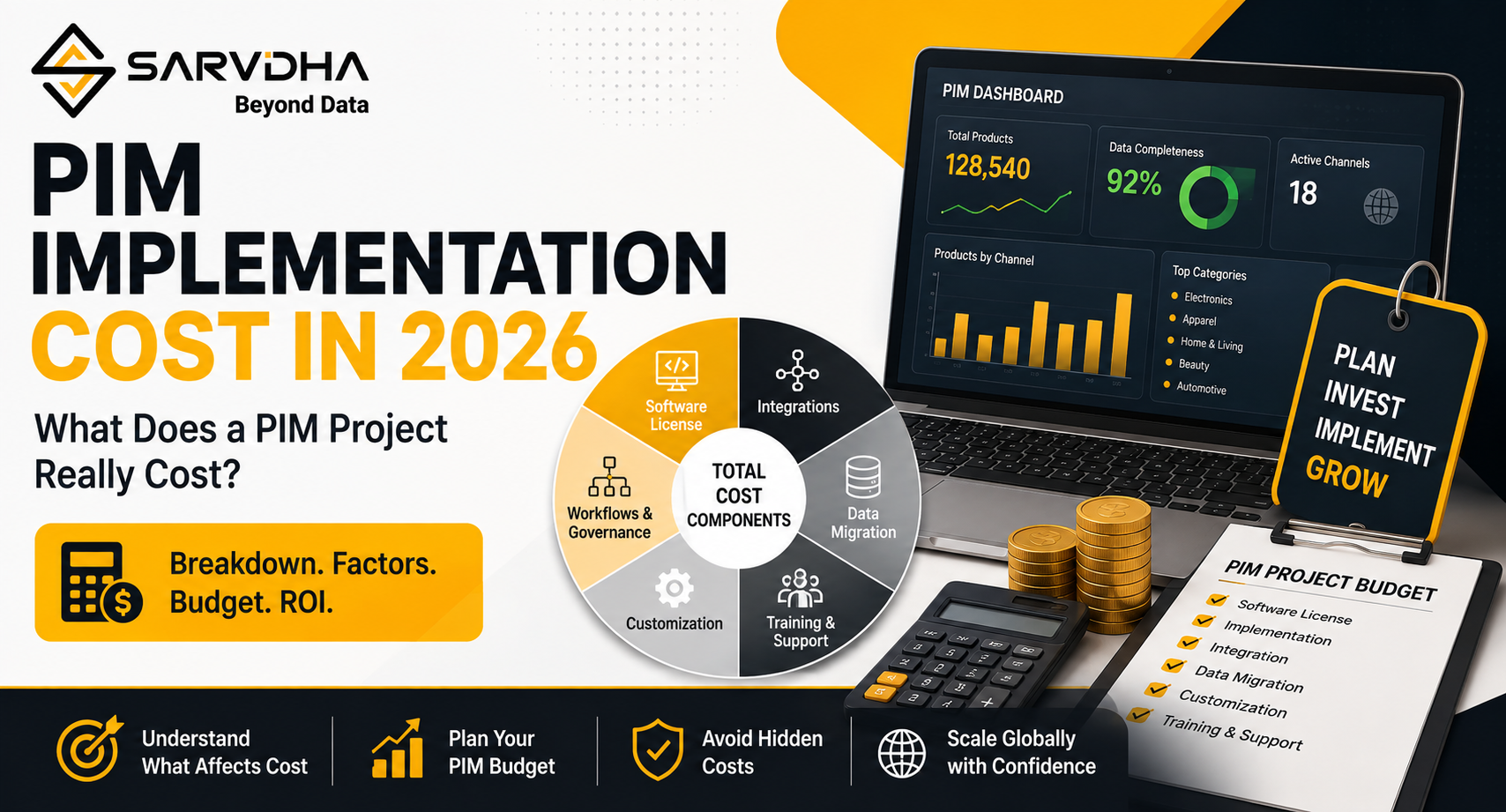
10. Consider Total Cost of Ownership
Price is important.
But the license or subscription cost is only one part of the overall PIM investment.
Consider:
- Software licensing
- Implementation
- Customization
- Integration
- Data migration
- Infrastructure
- Training
- Support
- Maintenance
- Upgrades
- Additional modules
- Additional users
- Additional environments
A PIM that looks inexpensive initially can become expensive if it requires significant customization and integration work.
Similarly, a more capable enterprise PIM may provide better long-term value even if the initial investment is higher.
The right question is:
What is the total cost of ownership over several years?
Don't Choose a PIM Based Only on Features
One of the most common mistakes businesses make is comparing PIM platforms using a feature checklist.
For example:
- Does it have workflows?
- Does it have APIs?
- Does it support localization?
- Does it have import/export?
- Does it support product relationships?
Most established PIM platforms will have many of these capabilities.
The real difference is often:
How well does the platform support your specific business requirements?
A feature may exist but still require significant customization.
Therefore, ask vendors to demonstrate your actual use cases.
Use Your Own Product Data During the PIM Demo
This is one of the most important recommendations when evaluating a PIM.
Don't only watch a generic vendor demonstration.
Give the vendor a realistic sample of your product data.
For example:
- 100–500 representative products
- Complex products
- Product variants
- Multiple categories
- Different languages
- Existing images
- Existing attributes
- Existing supplier data
Then ask the vendor or implementation partner to demonstrate:
- Data import
- Product modeling
- Data enrichment
- Validation
- Workflow
- Search
- Localization
- Export
- API integration
- Channel publishing
This gives you a much better understanding of whether the platform actually fits your business.
Don't Forget Data Migration
Data migration is one of the most underestimated parts of a PIM implementation.
Your existing product information may exist across:
- ERP
- Excel
- CSV files
- Databases
- Supplier files
- E-commerce platforms
- CMS
- Shared folders
- Legacy systems
Simply importing everything into your new PIM may not be the right approach.
Before migration, you may need to:
- Audit the data
- Remove duplicates
- Standardize values
- Normalize attributes
- Map categories
- Clean product descriptions
- Validate units
- Identify missing information
- Define product relationships
- Map old fields to the new data model
A successful PIM implementation often starts with a successful data cleanup strategy.
Think About User Adoption
Even the best PIM platform can fail if employees do not use it properly.
Your users need to understand:
- Why the PIM is being introduced
- What information they are responsible for
- How workflows work
- How approvals work
- Where product data should be maintained
- Which system is the source of truth
Consider:
- User training
- Documentation
- Internal champions
- Role-based interfaces
- Change management
- Ongoing support
Technology is only one part of a PIM transformation.
People and processes matter just as much.
PIM and AI Readiness
Artificial Intelligence is becoming increasingly important in e-commerce.
Businesses are exploring AI for:
- Product recommendations
- Conversational commerce
- Product search
- Automated descriptions
- Content generation
- Product classification
- Attribute extraction
- Data enrichment
- Customer personalization
But AI is only as useful as the data it can access.
If product information is incomplete, inconsistent, or poorly structured, AI applications may produce unreliable results.
When selecting a PIM, consider whether it can support your future AI strategy through:
- Structured product data
- APIs
- Metadata
- Product relationships
- Attribute management
- Data quality
- Content enrichment
- Integration capabilities
Your PIM should not only solve today's product data problems.
It should help create a foundation for tomorrow's digital experiences.
Cloud PIM vs On-Premise PIM
Another consideration is deployment.
Some organizations prefer cloud-based PIM platforms because they can provide:
- Faster deployment
- Managed infrastructure
- Automatic updates
- Easier scalability
- Reduced infrastructure management
Other organizations may have requirements that make self-hosted or on-premise deployment more appropriate.
Consider:
- Security requirements
- Compliance
- Data residency
- Infrastructure strategy
- IT capabilities
- Integration requirements
- Upgrade responsibilities
- Total cost of ownership
There is no universal answer.
The right deployment model depends on your organization's requirements.
Open Source vs Commercial PIM
Some businesses also need to decide between open-source and commercial PIM solutions.
Open-source platforms can provide:
- Greater flexibility
- Source-code access
- Customization options
- Potentially lower software licensing costs
Commercial platforms may provide:
- Vendor support
- Enterprise features
- Managed services
- Dedicated support
- Faster implementation options
- Established partner ecosystems
Again, the best option depends on your business.
The key is to evaluate the total solution, not just the software license.
Questions to Ask a PIM Vendor
Before signing a PIM contract, ask the vendor:
Product Data
- How many products can the platform support?
- How many attributes can a product have?
- How does the system handle variants?
- How does it manage product relationships?
Data Quality
- Does it support validation rules?
- Does it provide completeness scoring?
- Can business rules be automated?
Workflow
- Can workflows be customized?
- Can different teams have different approval processes?
- Is there an audit trail?
Integration
- What APIs are available?
- How does ERP integration work?
- How does DAM integration work?
- How does e-commerce integration work?
- How does marketplace integration work?
Global Commerce
- How are languages managed?
- How are regional variations handled?
- Can different markets have different attributes?
Scalability
- What is the maximum supported product volume?
- How does the platform perform with large catalogs?
- How does it handle large imports and exports?
Implementation
- What is the typical implementation timeline?
- What data migration support is available?
- What level of customization is normally required?
Cost
- What is included in the license?
- What additional modules cost extra?
- What are the implementation costs?
- What are the ongoing support costs?
These questions can reveal important differences between platforms.
Create a PIM Evaluation Scorecard
Before making a final decision, create an evaluation framework.
For example, evaluate each platform against:
- Business requirements
- Product modeling
- Data quality
- Taxonomy
- Workflow
- Localization
- Integration
- Scalability
- User experience
- API capabilities
- Security
- Implementation
- Support
- Total cost of ownership
Don't simply choose the platform with the highest number of features.
Choose the platform that provides the best overall fit for your organization.
A PIM Is More Than Software
One of the most important lessons from PIM projects is this:
PIM implementation is not just a software implementation.
It is a product data transformation project.
You may need to rethink:
- Product data ownership
- Product taxonomy
- Data governance
- Product workflows
- Data quality
- Integration architecture
- Content processes
- Localization
- Channel management
The software is the platform.
The real value comes from how your organization uses it.
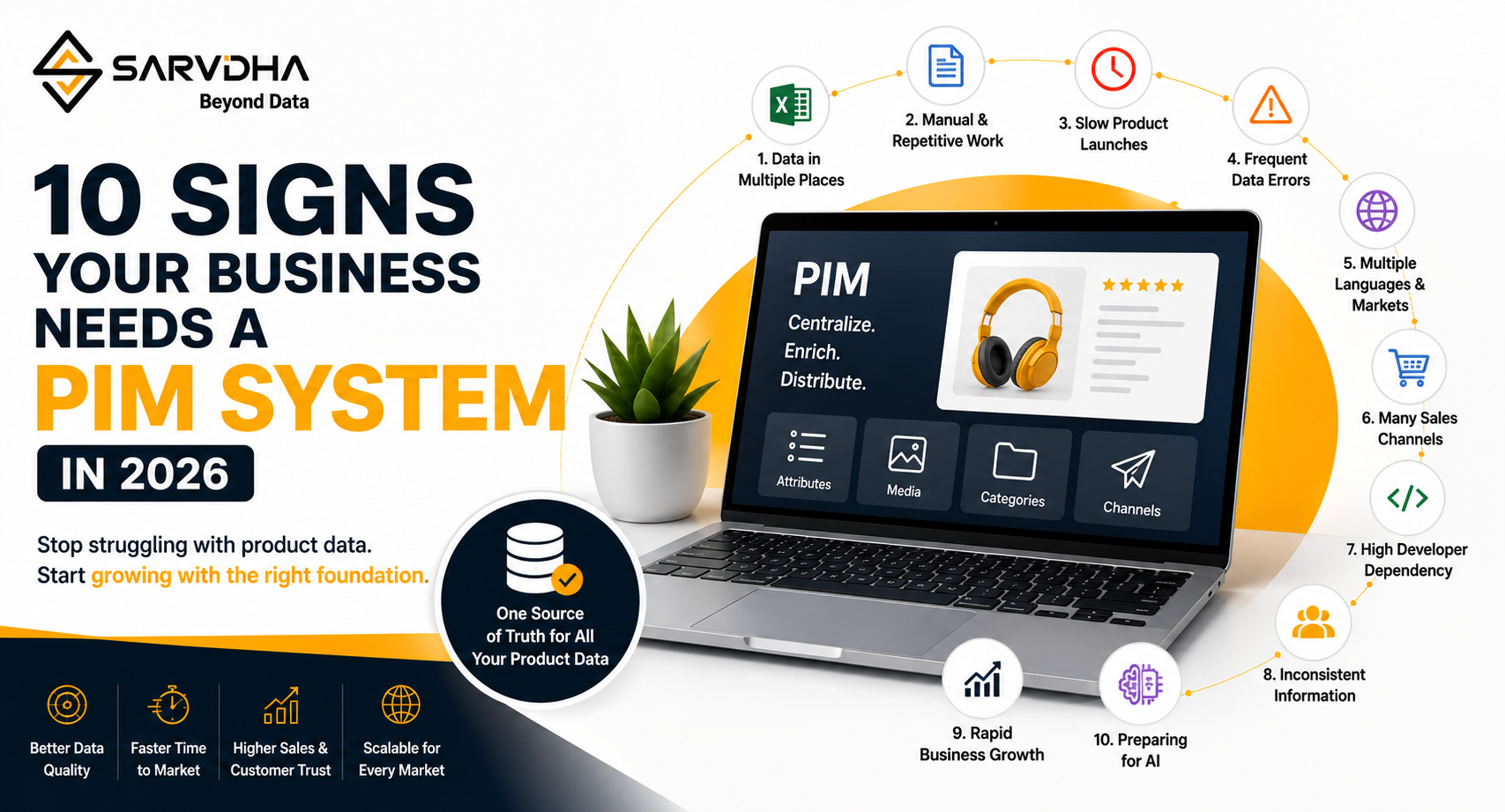
When Should You Implement a PIM?
A PIM may be a good fit if your organization is experiencing:
- Rapid product catalog growth
- Multiple e-commerce channels
- International expansion
- Multiple languages
- Poor product data quality
- Heavy spreadsheet usage
- Slow product onboarding
- Duplicate product information
- Marketplace expansion
- Complex product attributes
- Increasing content requirements
- AI-driven commerce initiatives
If several of these challenges exist, it may be time to evaluate a dedicated PIM solution.
Final Checklist Before Choosing a PIM
Before selecting your platform, make sure you understand:
Business
What problem are we solving?
Data
What product information do we need to manage?
People
Who will use and maintain the system?
Process
How will product information be created, reviewed, approved, and published?
Technology
Which systems need to integrate with PIM?
Markets
Which countries and languages do we support?
Channels
Where will product information be published?
Future
How will our product data requirements change over the next three to five years?
If you can answer these questions clearly, you are in a much stronger position to evaluate PIM platforms.
How Sarvdha Can Help
Selecting a PIM is only the first step.
At Sarvdha, we help businesses move from PIM strategy to implementation.
Our services include:
- PIM consulting
- PIM platform evaluation
- PIM architecture
- Product data modeling
- Taxonomy design
- Data quality assessment
- Data migration
- ERP-PIM integration
- DAM integration
- E-commerce integration
- Marketplace integration
- Product data governance
- Workflow design
- Global product localization
- AI-ready product data
We focus on your business requirements first and then design the right product information architecture around them.
Because the goal isn't simply to install a PIM.
The goal is to build a product data foundation that can scale with your business.
Conclusion
Choosing the right PIM is an important decision for any organization managing complex product information.
The best PIM is not necessarily the one with the longest feature list.
It is the one that fits your:
Business requirements.
Product data model.
Users and workflows.
Technology architecture.
Global markets.
Digital channels.
Future growth strategy.
Before selecting a platform, understand your data, define your requirements, evaluate integrations, test real product scenarios, and calculate the total cost of ownership.
Most importantly, remember:
A PIM is not just another enterprise application.
It can become the foundation for how your organization manages product information across the entire digital commerce ecosystem.
Choose the platform carefully.
Design the data model properly.
Plan the integrations early.
And build for the future.
Frequently Asked Questions
What is the best PIM system?
There is no single best PIM for every business. The right platform depends on product complexity, catalog size, integrations, users, markets, channels, budget, and business requirements.
How much does a PIM cost?
PIM costs vary significantly depending on the platform, number of products, users, integrations, implementation complexity, hosting model, and required features. Total cost of ownership should be considered rather than only the software license.
How long does PIM implementation take?
Implementation timelines vary based on product volume, data quality, integrations, workflows, localization, customization, and migration requirements. A simple implementation can be significantly faster than a complex global enterprise implementation.
Can PIM integrate with ERP?
Yes. ERP-PIM integration is a common architecture. ERP may provide operational product information while PIM manages enriched product content for digital channels.
Can PIM manage multiple languages?
Many enterprise PIM platforms support multilingual product information and localization. However, the exact capabilities should be evaluated against your specific market and language requirements.
Is PIM useful for e-commerce?
Yes. PIM can help e-commerce businesses centralize product information, improve data quality, manage complex attributes, support multiple channels, and distribute consistent product content.
Does PIM replace ERP?
No. PIM and ERP generally serve different purposes. ERP manages business operations while PIM focuses on product information.
Is PIM necessary for every business?
No. Businesses with small product catalogs and simple product information may not need a dedicated PIM. PIM becomes more valuable as product, channel, market, and data complexity increases.